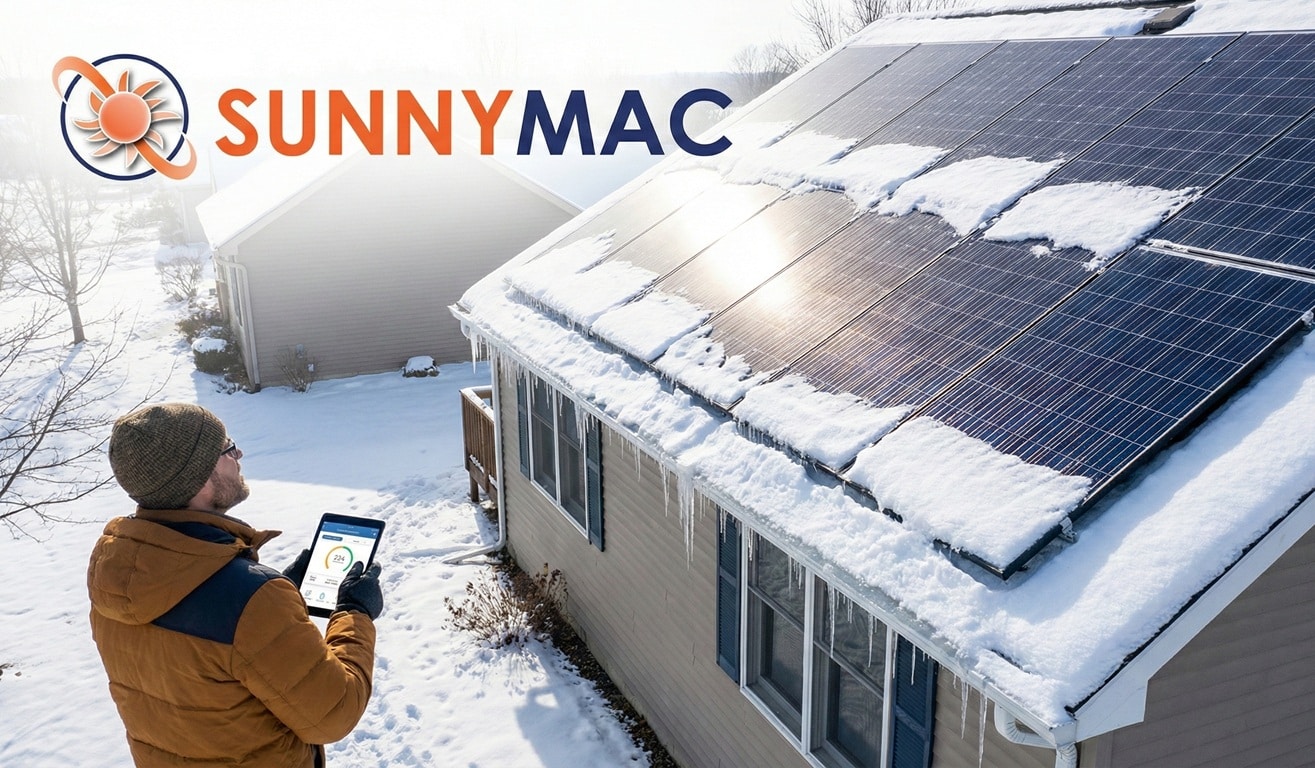
As winter settles into Maryland, Delaware, Pennsylvania, and New Jersey, you might be looking at your solar panels and wondering: Is my system ready for the snow and ice?
It is a common concern. We often associate solar energy with the long, hot days of July, but the truth is that your solar system is an all-season workhorse. In fact, winter can be a surprisingly productive time for solar energy, if you know what to look for.
At SunnyMac, we believe in stability. We want you to feel as confident in your energy production in January as you do in June. This guide will walk you through the reality of winter solar production and provide a simple, safety-first checklist to keep your home running efficiently all season long.
The Cold Hard Truth: Solar Loves Winter
Before we get to the maintenance checklist, let’s bust a major myth: Solar panels do not stop working in the winter.
Solar panels run on light, not heat. In fact, like most electronics, solar photovoltaic (PV) cells operate more efficiently in cooler temperatures. Excessive heat can actually reduce voltage, whereas a crisp, sunny winter day in the Mid-Atlantic can produce some of your system’s most efficient power pulses.
While it is true that shorter daylight hours and snow cover can affect total output, the “albedo effect” (sunlight reflecting off white snow) can sometimes give your panels an extra boost when the sun finally breaks through.
Your Winter Solar Maintenance Checklist
Maintaining your solar system in winter is less about scrubbing and fixing, and more about monitoring and safety.
Use this checklist to ensure your home remains efficient and protected through the coldest months.
1. Monitor Your Production App
The best way to check your system’s health is from the comfort of your warm living room.
- Action: Log into your monitoring app (such as the SolarEdge app for many of our customers) at least once a week.
- What to look for: a sudden drop in production that doesn’t match the weather report. If it’s sunny out but your production is zero, you may have heavy snow cover or a system alert.
2. Perform a “Feet-on-the-Ground” Visual Inspection
We cannot stress this enough: Stay off the roof.
- Action: After a heavy storm, walk around your property and look up at your panels from the ground.
- What to look for: Large debris, ice dams forming at the gutters, or heavy snow accumulation that isn’t sliding off.
- Why it matters: Safety. Roofs in winter are slippery and dangerous. If you see something concerning that requires roof access, call a professional.
3. Let the Snow Slide
Homeowners often ask, “Should I rake the snow off my panels?”
- The Verdict: Usually, no.
- Why: Solar panels are tempered glass and are installed at an angle. They are designed to shed snow naturally as they warm up.
- The Risk: Using a standard roof rake can scratch the glass or damage the frame, potentially voiding your warranty. Plus, the small amount of energy gained by clearing them a day early is rarely worth the safety risk.
- Exception: If we face a record-breaking blizzard with heavy accumulation that remains for weeks, contact SunnyMac for guidance.
4. Check for Ice Dams
This is where the SunnyMac difference comes in. Because we are experts in both Solar and Roofing, we know that your panels and shingles must work together.
- Action: Look for icicles forming on the edge of your roof or gutters.
- The Risk: Ice dams can trap water under shingles, leading to leaks. Solar panels can sometimes change how snow melts and refreezes on a roof.
- Solution: If you notice persistent ice damming, it may be an insulation or ventilation issue, something our roofing team can help diagnose.
5. Optimize Your Home’s “Energy Defense”
Solar production is only half the battle; how you use that energy matters just as much.
- Action: Check your heating system’s air filter.
- Why: A clogged filter forces your HVAC system to work harder, using up more of the precious solar energy you are generating.
- The SunnyMac Tip: We view your home as a complete system. Efficient HVAC usage ensures your solar investment goes further, keeping your bills low even when production dips slightly in winter.
Frequently Asked Questions (FAQs)
Q: Will snow damage my solar panels?
A: It is highly unlikely. Solar panels are stress-tested to withstand heavy snow loads and hail. As long as they were installed by a reputable partner like SunnyMac, they are built for our regional weather.
Q: Do I need to buy a special snow rake?
A: We generally advise against it. If you must clear snow, use a specialized soft-foam snow rake and never scrape the surface. However, letting nature take its course is almost always the safest and most cost-effective option.
Q: What if my production drops to zero during a snowstorm?
A: This is normal. Net Metering is designed for this exact scenario. You built up “credits” with your utility company during the sunny summer months to cover you during these winter dips.
Need Help? We Are Here for the Whole Home.
Winter can be tough on a home, but your energy system is built to handle it. Whether you are concerned about snow on your panels, a drafty roof, or an inefficient furnace, SunnyMac is the only partner you need for the complete energy story.
Do you see something on your winter checklist that concerns you? Reach out to the SunnyMac team today. We provide honest guidance and dependable service to keep your home stable, sustainable, and warm.