Solar GuidesInstallation and project preparation
What to expect before and during solar installation
Most solar installations are straightforward: the crew arrives, the system goes on, and the installation itself is usually a day on site. Some homes need electrical or site work first to meet code and utility requirements.
Ranked #5 in the country for residential solar by Solar Power World, 2026. See our awards and credentials

Not every item applies to every home. Your project plan lists what applies to yours.
How long does a solar installation take?
Most installs take one day; larger systems can take two. We'll confirm yours when we schedule.
Before the crew arrives, it helps to clear the driveway and move vehicles away from the house, make sure the path to your meter is clear, provide access to your electrical panel, and clear space in the garage, basement or attic if the work reaches those areas.
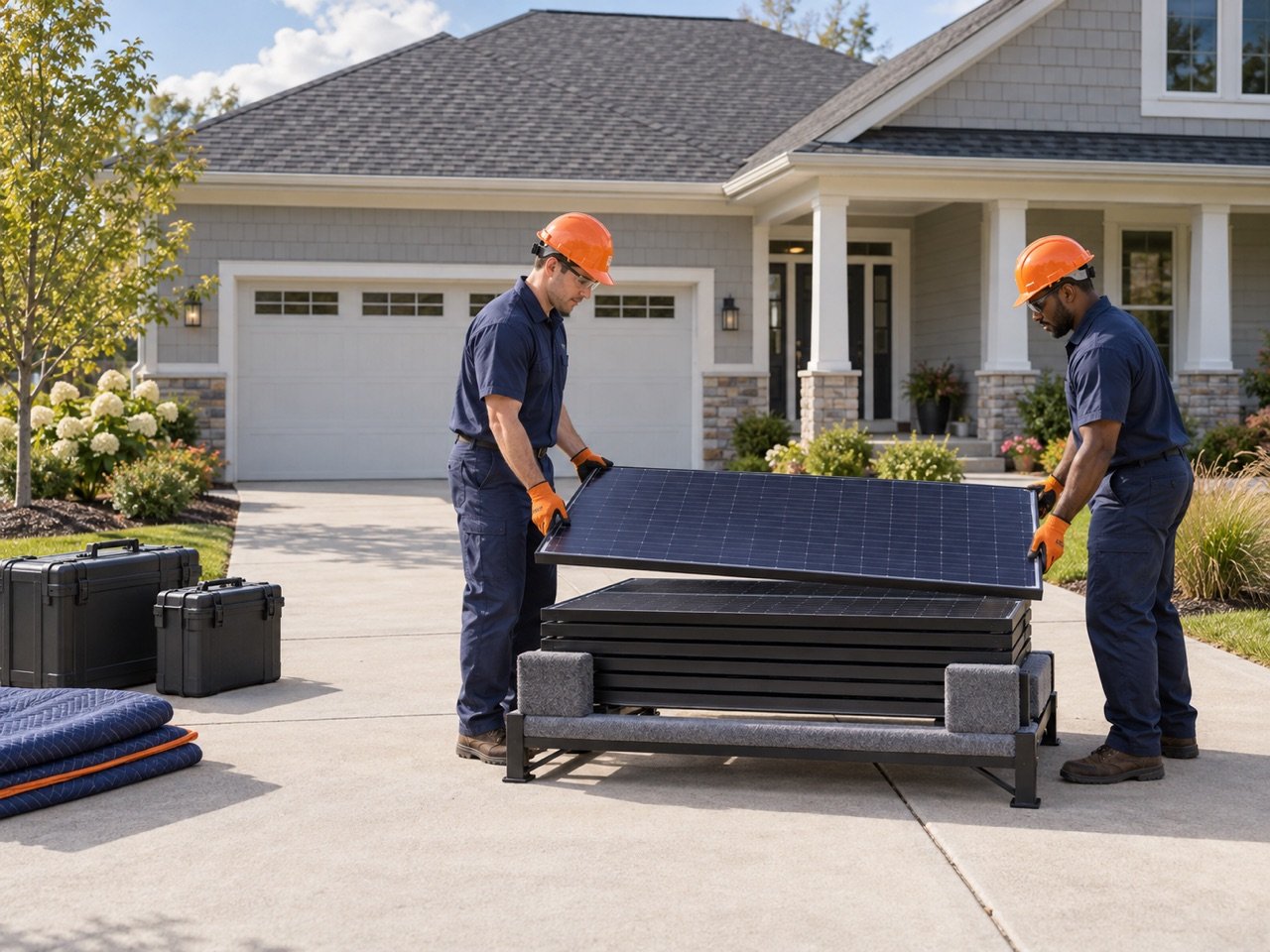
What to expect
- Crews have typically arrived between 7:30am and 9am. Your own arrival window is confirmed when the work is scheduled — this is what has been usual, not a time we are committing to for your home. The crew lead introduces themselves and walks through the plan for your home before starting.
- Someone who can make decisions should be home. Questions come up, and answering them on the spot is faster than a return visit.
- Roof work involves mounting the racking and panels and sealing every roof penetration. You will hear footsteps, drilling and hammering overhead.
- Electrical work involves installing the inverter and connecting to your main panel. If service work is needed to bring things up to code, the power may be shut off for part of the day.
- Monitoring equipment is installed so you can track production, and conduit is run along exterior or interior walls.
- It is an active construction site. Keep a safe distance from work areas and expect moderate noise through the day.
After the crew leaves
The site is cleaned as thoroughly as a construction site allows, and the crew lead reviews what was completed if you are home. Your system will not be switched on that day, and that is normal. Three things happen next: your township inspects the installation, your utility grants Permission to Operate, and then SunnyMac walks you through turning the system on and using the monitoring app.
Will my main electrical panel need work before solar?
Some homes need work on the main service panel before solar can be connected. There are two versions of this, and the difference matters: a panel swap replaces the panel while keeping your existing amperage, and an upgrade raises the amperage capacity.
When this applies: when your existing panel cannot safely support the new solar connection, or is not up to current code.
What to expect
- This has usually been a single day, with the power off for much of the working day while licensed electricians work. The expected outage for your home is confirmed before the work is scheduled — it depends on your panel, your service and the utility.
- If your current panel is flush-mounted, cuts into the wall may be needed to fit the new one, which is often larger. Cosmetic drywall repair is not normally part of this work. What your agreement covers is what governs — ask us to confirm it for your project rather than relying on this page.
- Your team relabels the panel and its directory as part of the work.
- A panel upgrade does not repair pre-existing circuits that were already not working.
- In some states an external emergency disconnect is required and is installed beside your electric meter. Whether this applies depends on your state and current code.
- In some cases this upgrade removes the need for trenching.
Download the Main Service Panel guide (PDF, 81 KB)
Why might my electrical panel need to be moved?
Solar connects directly to your main electrical panel, so the panel has to meet current working-space and safety standards before the system can be inspected and approved. If it does not, the panel may need to move.
When this applies: typically when the panel sits in a clothes closet or bathroom, when there is not enough clear working space around it or no clear path to it, or when pipes, ducts or other obstructions sit above or below it.
What to expect
- Power is shut down temporarily while a new panel is installed in an approved location and your circuits are reconnected and relabeled.
- The old location may become a sealed junction box, with the existing wiring connections safely enclosed.
- Small wall openings may be needed to route wiring between the old and new locations, which can mean cutting drywall. Cosmetic drywall repair is not normally part of this work. What your agreement covers is what governs — ask us to confirm it for your project rather than relying on this page.
- Sometimes the best code-compliant location is an exterior wall. Outdoor panels are common and fully safe — weather-rated equipment, sealed connections, same inspection standards. The only practical difference is that you would reset a tripped breaker outside.
- This work is usually done before or during installation, which avoids failed inspections, interconnection delays and extra visits.
Download the Panel Relocation guide (PDF, 83 KB)
Meter swap or relocation
Your meter enclosure may need replacing with one compatible with solar equipment and utility standards. In some cases the meter also moves.
When this applies: typically when the existing enclosure is rusted or damaged, when the meter is a ring-style meter that net metering cannot use, when it is not compatible with a meter collar, when it sits inside the house, when it does not meet clearance or accessibility standards, or when you are upgrading your electrical service.
What to expect
- The power is off for part of the working day, and longer where relocation or underground service is involved. The expected outage for your home is confirmed before the work is scheduled.
- The work involves disconnecting the existing wiring, removing the old enclosure, installing the new one, reconnecting and restoring power.
- Where the meter moves, the new position is usually near your solar equipment.
- Some siding damage can occur. Siding repair is not normally part of this work. What your agreement covers is what governs — ask us to confirm it for your project rather than relying on this page.
- Homes with underground service need utility coordination, which can mean a longer outage.
Download the Meter Swap and Relocation guide (PDF, 80 KB)
Trenching or aerial wiring
If power has to run between buildings — to a detached garage or shed, for instance — there are two accepted ways to do it, and neither is better in general.
When this applies: when a detached structure does not have enough power, when existing wiring is not safe or up to code, or when existing conduit cannot be reused. We check first whether existing wiring, an existing panel or a previous trench can be reused, which sometimes avoids the work entirely.
What to expect
- Underground (trenching) is less visible once finished and suits grass or dirt runs. Utility lines are marked before digging, the trench is typically 18 to 24 inches deep, and the path takes the shortest route that avoids obstructions and landscaping.
- Trenches are normally backfilled once the installation is complete, unless your township requires an open trench for inspection — in which case a safety zone is set up around it.
- The yard is restored as reasonably as possible. Some minor landscape change can occur, and grass seed cannot be guaranteed to take.
- Overhead (aerial) is usually faster and avoids digging, which suits runs that would otherwise cross a driveway or concrete. Wires are installed well above ground level and a support mast may be added for proper clearance. It is visible, but neatly installed.
Download the Trenching and Aerial Wiring guide (PDF, 80 KB)
SunnyMac by the numbers
15,000+
solar installations since 2009
18 weeks
median, agreement to permission to operate
Median, not best case. Most of it is permitting and utility interconnection rather than installation, which is usually a day or two on the roof — so the number moves with your municipality and your utility, not with how busy we are.
About SunnyMac
2009
the year SunnyMac was founded
3 offices
Marlton NJ, Bethlehem PA and Wilmington DE
4 states
New Jersey, Pennsylvania, Delaware and Maryland
4.6
out of 5 on Google, based on 669 reviews · As of October 6, 2026 · Read our Google reviews (opens in a new tab)
18 weeks
median from signed agreement to a powered system · since April 2024
We stay with what we build. SunnyMac is a home electrification, roofing and HVAC company specializing in solar, battery storage, roofing, and heating and cooling, with a mission to make every home we touch more comfortable, more resilient and cheaper to run, proudly serving communities in NJ, PA, MD and DE since 2009.