Solar GuidesRoof and solar together
Doing the roof and the panels at the same time
Panels last decades. If the roof underneath them does not, someone has to remove and reinstall the array to replace it.
Ranked #5 in the country for residential solar by Solar Power World, 2026. See our awards and credentials
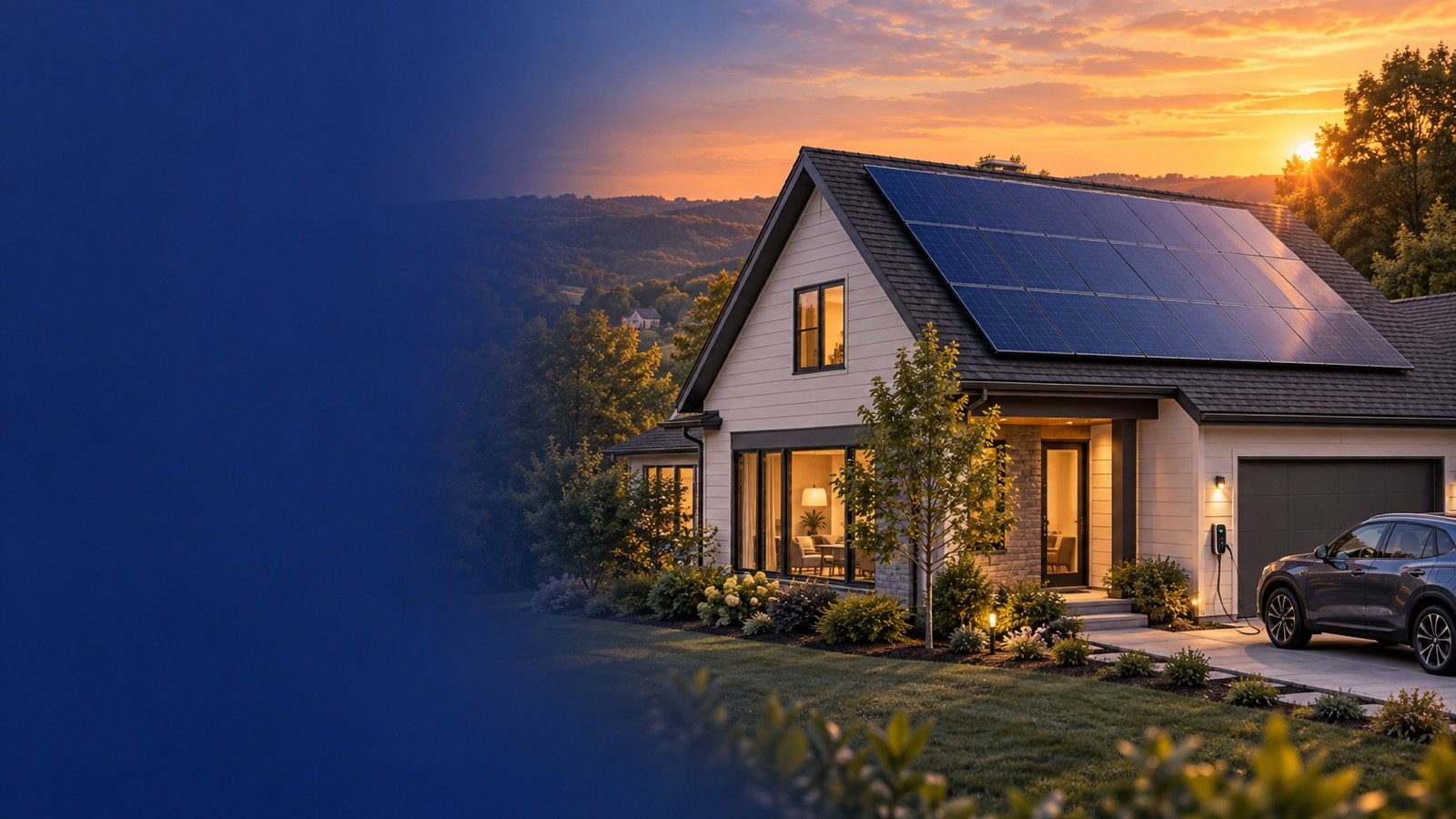
If the roof is near the end of its useful life, it may make sense to address the roof before solar. The appropriate sequence depends on the condition of the roof, the solar project, and the work being considered. Roof age alone does not determine what should happen first. Panels do have to come off before a roof can be replaced and go back on afterwards, which is why the two projects are worth looking at together.
What happens if my roof needs replacing after solar goes on?
Removing and reinstalling an existing solar array adds work and cost to a later roofing project. If the roof may need significant work within the expected life of the solar installation, that is worth considering when the two projects are planned.
Do I have to replace my roof before getting solar?
A roof does not automatically need to be replaced just because solar is being added. If the roof is in suitable condition and has sufficient remaining useful life for the project, replacement may not be necessary first.
How do you decide if a roof should be replaced before solar?
Whether a roof should be replaced before panels go on is a question about condition, not about age. Two roofs the same age can be in very different states depending on ventilation, the original installation and the weather they have had. So the answer comes from looking, and these are the parts that get looked at.
Decking is the structural layer under everything else — the boards or sheets fixed to the rafters. Racking is anchored through the covering into the structure beneath it — which layer depends on the engineered mounting system, with manufacturers offering both rafter and deck attachment. Either way the decking is what the covering and the flashing rely on, so it has to be sound. Soft or delaminated decking is the finding most likely to change the plan, because it cannot be corrected from above once panels are installed.
Underlayment sits between the decking and the shingles as a secondary water barrier. It is the layer that keeps a wind-driven leak from reaching the deck when a shingle lifts, and it is invisible once the roof is finished — which is why its condition is established during an inspection rather than assumed.
Flashing is the metal that seals the places a roof cannot simply be covered: around chimneys and vents, where a roof meets a wall, and in the valleys where two slopes run together. Most leaks are flashing failures rather than shingle failures, and every solar penetration adds a new sealed point, so existing flashing condition is directly relevant.
Ventilation is how the roof assembly breathes. Intake at the eaves and exhaust near the ridge let heat and moisture out of the attic. Poor ventilation shortens the life of the covering from underneath, and an array changes the airflow and shading across the roof surface — so it is worth understanding before panels are added, not after.
Roof condition, rather than age alone, should help determine how roofing and solar are sequenced. The appropriate property-specific review can establish the conditions that need to be considered before the work is planned.
What decides this
- Roof condition and expected remaining life. Consider whether the roof is likely to need significant work during the expected life of the solar installation.
- Whether the array covers the section that needs work. Sometimes it does not, and then the two jobs are independent.
- The potential cost of removing and reinstalling solar. If later roofing work would require the array to come off, that additional work is worth considering when the projects are planned.
- Whether the projects should be coordinated. When roofing and solar both need attention, planning them together can help identify an appropriate sequence and avoid unnecessary repeated work. Local permitting requirements and processes can vary by municipality and by the work being performed.
Want this answered for your home?
A few questions, then preliminary guidance about how urgently to act and what SunnyMac may review next. If water is coming in now, we will tell you to call.
SunnyMac by the numbers
15,000+
solar installations since 2009
18 weeks
median, agreement to permission to operate
Median, not best case. Most of it is permitting and utility interconnection rather than installation, which is usually a day or two on the roof — so the number moves with your municipality and your utility, not with how busy we are.
About SunnyMac
2009
the year SunnyMac was founded
3 offices
Marlton NJ, Bethlehem PA and Wilmington DE
4 states
New Jersey, Pennsylvania, Delaware and Maryland
4.6
out of 5 on Google, based on 669 reviews · As of October 6, 2026 · Read our Google reviews (opens in a new tab)
18 weeks
median from signed agreement to a powered system · since April 2024
We stay with what we build. SunnyMac is a home electrification, roofing and HVAC company specializing in solar, battery storage, roofing, and heating and cooling, with a mission to make every home we touch more comfortable, more resilient and cheaper to run, proudly serving communities in NJ, PA, MD and DE since 2009.